No matter where you’re based in New Zealand, warm air rises. It doesn’t matter whether you’re running a warehouse in Invercargill or a distribution centre in Whangārei; the physics stays the same, and so does the problem when that air has nowhere to go.
This guide brings together everything commercial building owners, architects, and facility managers need to know about why roof ventilation is important in New Zealand: what it saves you, what it protects, and what your building needs to stay compliant and comfortable.
When hot, humid air settles at the top of a building instead of escaping, it causes damage that’s expensive to fix and even more expensive to ignore. At Roofquip, we supply and specify wind-driven ventilation systems for commercial and industrial sites across NZ. Let’s explore the benefits of roof ventilation systems for NZ’s commercial and industrial sites.
Every commercial or industrial building generates heat, whether that’s from machinery, lighting, foot traffic, or simply the sun on a metal roof. In a well-vented building, that heat escapes. In a poorly vented one, it collects at the roofline and has nowhere else to go.
That’s the short answer to why roof ventilation is important: trapped heat leads to trapped moisture, trapped moisture leads to condensation, and condensation leads to mould, rot, and a roof structure that works against you instead of protecting your building. Once that cycle starts, it doesn’t reverse itself; it only gets more expensive to deal with.
Proper roof ventilation delivers four main commercial ventilation benefits: lower running costs, building protection, healthier indoor air, and a more comfortable working environment. Here’s what each one looks like in practice.
New Zealand summers can be hot and humid, and that climate can easily make its way inside your building. A properly vented roof lets that heat escape before it builds up, so your air conditioning isn’t working overtime just to maintain a stable temperature. Less load on your cooling system means lower energy bills and a smaller carbon footprint for the building overall.
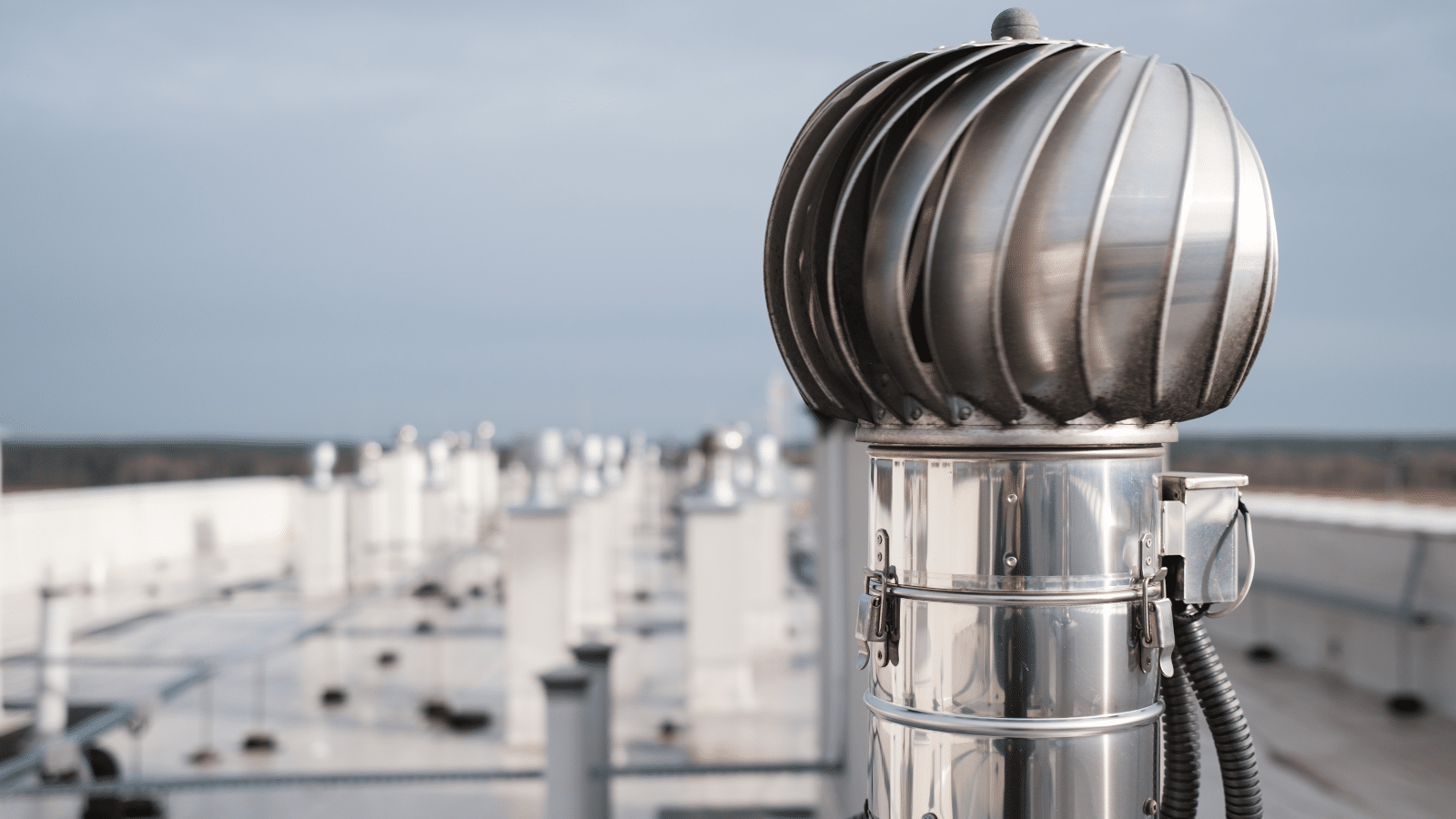
This is where the commercial ventilation benefits really separate wind-driven systems from anything electric. Because turbine ventilators like our Skyaxis range are driven entirely by wind and rising heat, they don’t draw a single watt from your switchboard. There’s no motor to power, no wiring to maintain, and nothing to switch on and off; they simply work whenever there’s a breeze.
That also means the running cost conversation isn’t just about electricity. Our units are built from marine-grade aluminium and stainless steel, with sealed bearing systems designed to handle years of outdoor exposure, including salt-laden coastal air, without seizing up or needing regular servicing. For facility managers, that’s one less piece of rooftop plant to budget maintenance hours for.
If you’re speccing a new build or upgrading an existing roof, it’s worth browsing our range of ventilation products to see the sizes and models available for your roof profile.
Where there’s warm air, there’s moisture, and if that humidity isn’t drawn away from the roof cavity, condensation pools. A warm, damp roof space is exactly the environment mould and mildew need to establish themselves, and mould doesn’t just look bad. It’s a real risk to the building’s structural integrity and to the health of anyone breathing that air.
Left unaddressed, the same trapped moisture causes rot in timber components and accelerates corrosion in metal fixings and supports. Materials also expand and contract as they heat and cool, and repeated cycles of that movement warp roofing materials over time.
A full re-roof is a significant capital cost; a ventilation system that prevents the need for one is comparatively a minor line item. Proper roof ventilation is one of the simplest ways to extend a roof’s working life and avoid that bill altogether.
Industrial facilities often produce airborne fumes, dust, and chemical particles as part of everyday operations. Proper ventilation draws that hazardous air out and replaces it with fresh outside air, which matters for fire risk, machinery performance, and, most importantly, the people working underneath that roof every day.
There’s even a productivity angle when it comes to commercial ventilation benefits. Extracting oppressively hot, stale air reduces the lethargy and loss of concentration that comes with working in an overheated space, which matters when you’re relying on staff to work long shifts in a facility that’s core to your operation. And because wind-driven ventilators have no motor, they do this without adding any mechanical noise to the workplace, unlike electric extraction fans running continuously overhead.
The New Zealand Building Code sets out minimum ventilation requirements for commercial and industrial premises, but “minimum” and “adequate” aren’t always the same thing. A small warehouse with light foot traffic has very different airflow needs to a manufacturing facility running heat-generating machinery or producing fumes and dust as part of its process.
Getting the number and placement of vents right depends on a few key factors, including the building’s volume, roof pitch, and what’s actually happening inside. That is where Roofquip’s technical consulting comes in. We work through airflow calculations with architects, specifiers, and facility managers so the ventilation solution matches the building, rather than guessing and hoping it’s enough.
If you’re specifying ventilation for a new build or reviewing an existing site, we can work through the numbers with you before you commit to a design.
The NZ Building Code sets baseline ventilation requirements for industrial buildings and commercial sites, but the right level of ventilation depends on its size, use, and internal heat or moisture load, not just the code minimum.
It depends on your building’s volume, roof pitch, and what’s happening inside it. We provide airflow calculations as part of our technical consulting service so you’re not just guessing.
Yes, turbine ventilators are designed to spin, even with just a light breeze, and they also draw on the natural stack effect of rising heat, so they keep working even when wind speed drops.
Units built from marine-grade aluminium and stainless steel, with sealed bearing systems, are specifically designed to withstand salt-air exposure without corroding or needing frequent servicing. Durability like this is one of the practical benefits of roof ventilation systems for NZ sites in coastal conditions.
Proper roof ventilation isn’t an added expense so much as a way to avoid bigger energy bills and roof repair costs down the line, while ensuring staff comfort. Between lower running costs, a longer roof life, and healthier indoor air, the commercial ventilation benefits add up quickly.
If you’re planning a new build, reviewing an existing site, or are just tired of watching your air conditioning work overtime every summer, get in touch, and we’ll help you work out the right ventilation solution for your commercial or industrial site.

© 2026 | Roofquip| All Rights Reserved | Designed by